About Us
Are Hair Transplants Painful?
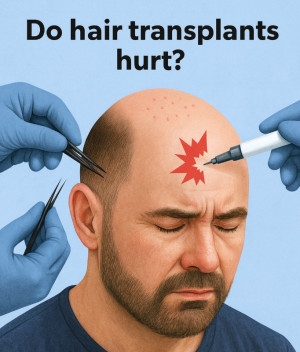
The question of pain is one of the first concerns people raise when they begin to seriously consider a hair transplant. It is understandable: the thought of thousands of hair follicles being removed and implanted across the scalp sounds uncomfortable at best, distressing at worst. Yet when you speak to patients after the procedure and ask if the transplant hurt, their experience is rarely one of acute pain. Instead, they describe a sense of pressure, minor stinging during the anaesthetic, and an odd awareness of what is happening, rather than distress. The reason is straightforward. Modern transplant surgery relies on local anaesthetic, similar to what you receive at the dentist. Once that has taken effect, your scalp is numb. You can hear and feel movement, but not pain in any meaningful sense.
At My Hair UK we perform follicular unit extraction using manual and motor-assisted instruments. Before any graft is taken, the donor area, usually at the back of the head, is numbed using small injections of local anaesthetic. These injections can cause a sharp sting for a few seconds, but the sensation fades quickly. During the procedure itself, most patients are able to speak, listen to music, or even fall asleep. What some describe is not pain, but a dull ache after several hours in the surgical chair, similar to how you might feel after a dental filling when the numbness starts to recede. You may experience some soreness and tightness in the donor and recipient areas later that evening, but this is usually managed well with paracetamol or ibuprofen. A study notes that fewer than 10 per cent of patients report moderate discomfort beyond 48 hours.
Recovery is generally straightforward. Mild swelling around the forehead can occur, especially if large areas have been implanted, and this may last two to three days. Some people say the tightness feels more like sunburn than genuine pain. Sleep can be slightly disrupted for a few nights simply because you are asked to sleep more upright to avoid disturbing the grafts. By the end of the first week, most patients are back to normal activity. It is rare to need strong medication beyond paracetamol for the first few days. For some, the anxiety beforehand is worse than the physical experience itself. This is why it is important to discuss expectations openly. If you live with generalised anxiety or have had a difficult medical experience in the past, mentioning this in consultation allows us to adjust our approach, offer mild sedation if necessary, and provide reassurance throughout the day.
Cost inevitably influences decisions. At My Hair UK, prices range from around £2,499 for up to 500 grafts, £2,899 for 1,000 grafts, rising to approximately £4,899 for 3,500 grafts. These figures include the surgical team, anaesthetic, aftercare, and follow-up. Some people look abroad in search of cheaper options, yet the decision should never rest solely on price. Safety, infection control, regulation, and access to aftercare matter just as much. In the UK, clinics are regulated by the CQC to meet clear standards, and you remain within the NHS system should complications arise. A hair transplant is not simply a cosmetic purchase but a form of minor surgery requiring a medical environment, trained practitioners, and realistic expectations.
Before booking a consultation, I often recommend that patients see their local GP for a general health check. This can help identify unrecognised conditions such as high blood pressure, thyroid disorders, iron deficiency, or undiagnosed diabetes, all of which can influence hair loss or slow recovery. It also ensures you are medically fit to undergo a long procedure under local anaesthetic. You might ask your GP for routine blood tests or advice on medications such as blood thinners, which may need to be stopped. It is a sensible foundation before planning any form of elective surgery.
Pain, then, should not be a barrier. Discomfort exists, but it is brief and manageable. Local anaesthetic is extremely effective. What truly matters is choosing a qualified team, understanding each stage of the process, and entering surgery in good health. In a world where appearance carries significant social weight, it is reasonable to want to address hair loss. Yet it is even more reasonable to want honest detail rather than marketing language. If you are considering a transplant, ask questions. What type of anaesthetic is used? How will discomfort be managed? What support is available if anxiety becomes overwhelming? Medicine is at its best when the patient is informed, involved, and treated as a partner rather than a passive recipient of care.
Related Articles:
- careers.jboard.io/companies/reducing-hair-transplant-inflammation-4100481
- careers.jboard.io/companies/my-hair-clinics-4281387
- careers.jboard.io/companies/liverpool-hair-clinics-5002502
- careers.jboard.io/companies/birmingham-hair-clinic-5230692